

Best Practices for Concrete Placement with the Octaform System
How to plan, execute, and document a successful pour for leak-free containment structures, by Dan Groeger.
Well-placed concrete is the single most important step in delivering a leak-free containment structure. All too often, project stakeholders underestimate the importance of concrete planning, placement timing, and quality control when working with the Octaform system. This article is intended to clarify why Octaform has specific requirements and to help key stakeholders plan and execute a successful day of concrete placement.
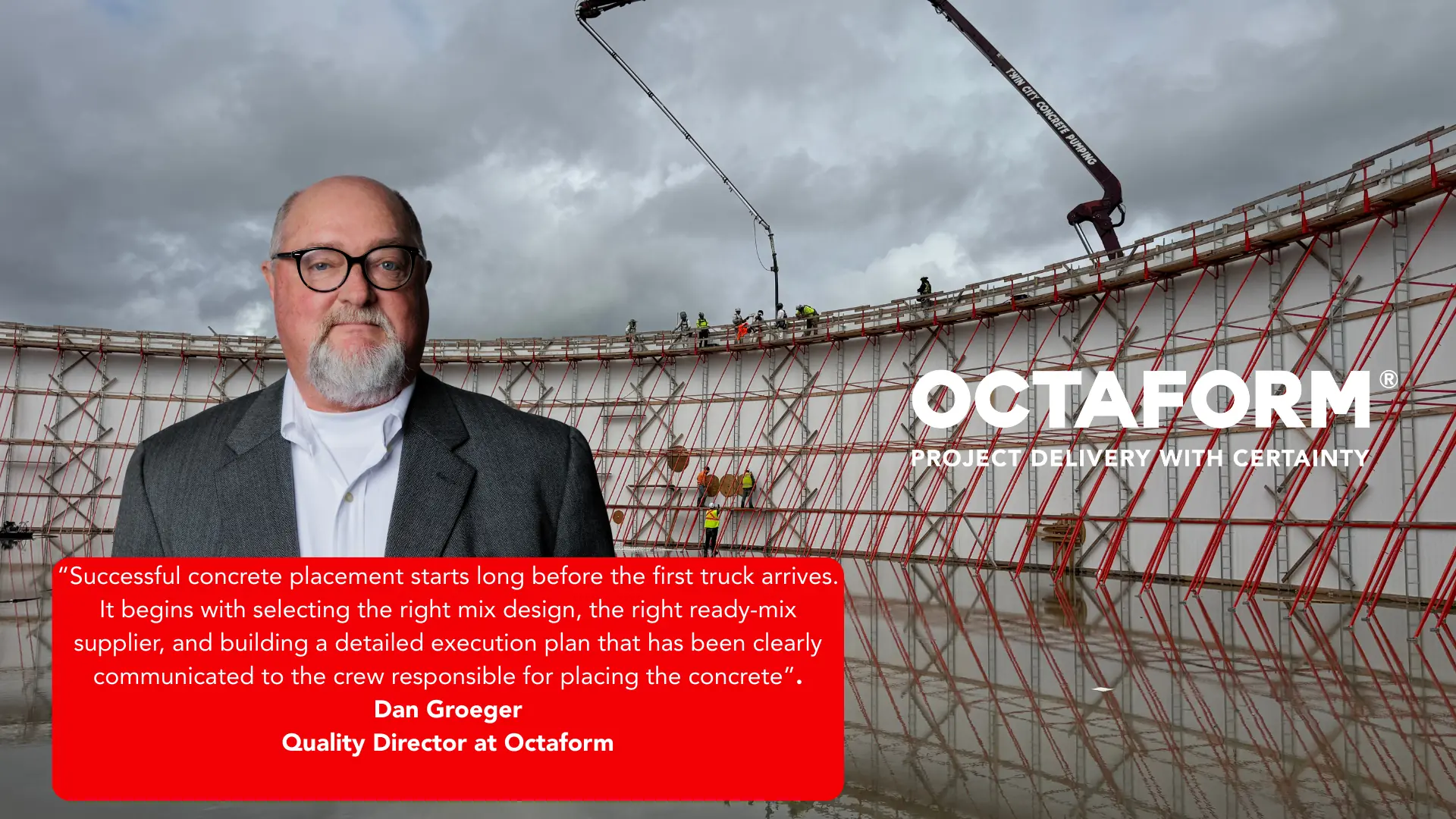
Successful concrete placement starts long before the first truck arrives. It begins with selecting the right mix design, the right ready-mix supplier, and building a detailed execution plan that has been clearly communicated to the crew responsible for placing the concrete. This is not simply about getting concrete into the forms—it’s about managing a controlled process that protects the schedule, the structure, and long-term watertight performance.
Why Planning Matters with Octaform
The Octaform system performs best when concrete is placed continuously with a consistent, flowable slump and a controlled set time. Interruptions or delays during placement can create conditions that increase risk, such as:
- Cold joints (loss of bonding between lifts)
- Voids from bridging or poor consolidation
- Inconsistent compaction due to rushed vibration or crew fatigue
Concrete placement success depends as much on logistics as it does on mix design. Key planning items include:
- Batch plant type (dry vs. central) and production consistency
- Well-maintained concrete trucks and reliable dispatching
- Truck rotation and delivery intervals
- Weather impacts (temperature, wind, humidity)
- Crew coordination, staging, access, and safety
- Clear pour sequencing and defined responsibilities
When these elements are planned and aligned, placement becomes predictable—and predictability is what prevents leaks.
Keys to Concrete Placement
1) A Structured QC Process (Not “Best Effort”)
Octaform provides a Quality Control (QC) checklist that must be completed by the contractor prior to every pour. This checklist is designed to protect both quality and schedule by confirming that the team is ready and the plan is executable.
Checklist categories commonly include:
- Pre-placement concrete meeting
- Rebar and formwork readiness
- Concrete placement controls
- Post-placement inspection and documentation
Items typically addressed on the referenced checklists include:
- Crew readiness and defined roles
- Key equipment verification (bracing, access, vibrators tested and working, pour sequencing confirmed)
- Concrete delivery coordination (truck intervals, batch plant contact info, backup plan)
- Required backup equipment (extra vibrators, generator, pump considerations, alternate batch plant options)
- Mix verification confirming Octaform has approved the mix for warranty compliance
- Environmental conditions (ambient temperature, wind, humidity)
A checklist is not “paperwork”—it is the system that prevents avoidable errors under pressure.
2) Field Services Manager Responsibilities (Pre-Pour to Post-Pour)
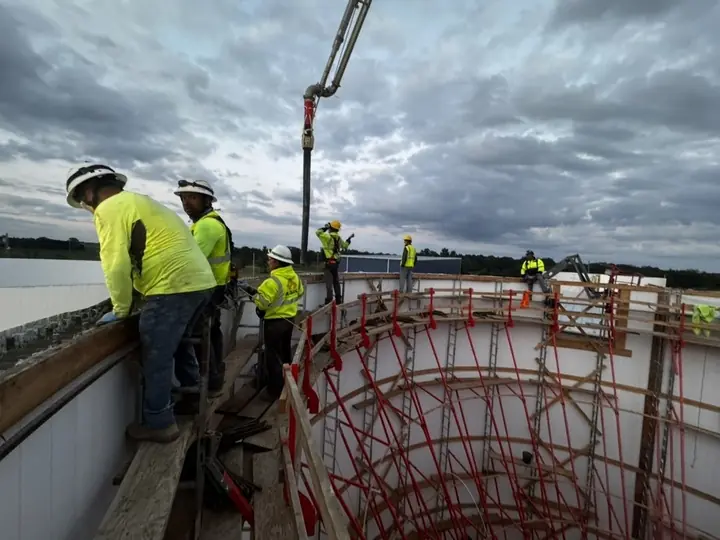
A successful pour requires leadership and verification. The Field Services Manager (FSM) plays a critical role in ensuring alignment between the plan, the crew, and real-world site conditions.
- Verify mix design approval
- Before scheduling a pour, the FSM must verify the mix design has been reviewed and approved.
- Review the concrete placement plan (with Contractor/Sub-Contractors
The FSM should review the placement plan with the contractor team to confirm:
- Crew allocation and job placement (who does what, where, and when)
- Vibration plan is understood and will be followed by the vibration crew
- Meeting time and tool readiness—all tools and equipment prepped the day prior
- Truck frequency and pump setup aligned with the placement rate
- Batch plant verification—foreman contacts the batch plant a few days prior to confirm pour time and mix details.
Pre-pour meeting (all stakeholders)
The FSM should:
- Set a pre-pour meeting with all stakeholders
- Follow the pre-pour meeting checklist as the agenda
- Collect signatures/acknowledgement, save the record, and send a copy to the QC Manager
- Execute the pour as planned.
During placement, ensure the team follows the agreed sequencing, delivery schedule, vibration plan, and QC requirements.
Post-pour walkdown & documentation
After placement (and as conditions require), the FSM should:
- Walk around the tank
- Take photos
- Check quality and identify concerns early
- Document temperature and relevant site conditions
- Record observations in daily notes for QC traceability
3) Octaform Minimum Mix Requirements
Octaform minimum requirements exist to ensure flow, consolidation, and watertight performance inside the form geometry.
-
Octaform minimum requirements include:
-
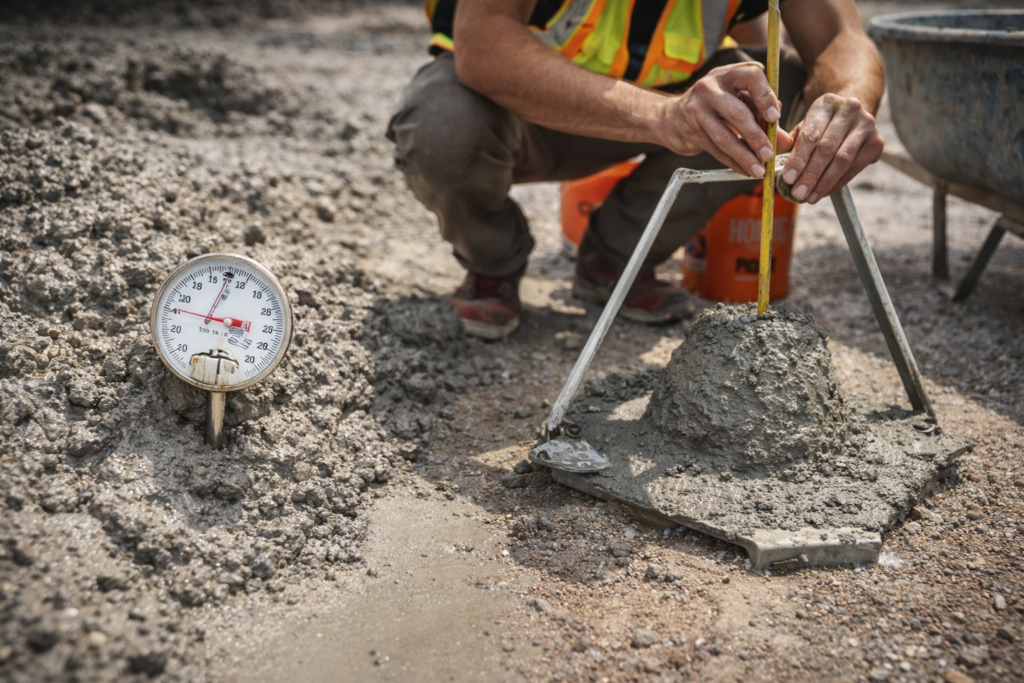
Delivered slump: 4 in (≈100 mm) or greater.
-
Placement slump: 8 in (≈200 mm) or greater after standard superplasticizer is added at the jobsite.
-
Placement window: Concrete must be placed within 40 minutes after the superplasticizer has been added.
Crystalline additive requirements:
-
Octaform SLT panels: crystalline added as specified by the manufacturer for the first lift of placement.
-
Octaform non-SLT panels: crystalline added as specified by the manufacturer throughout the entire placement.
-
Aggregate size: pea gravel mix no greater than 3/8 in (10 mm), or no more than 40% of the smallest area to be filled.
-
Air entrainment: 6% ± 1% for areas subject to freezing temperatures.
-
These requirements reduce risk of bridging, voids, segregation, early set, and inadequate consolidation—each of which can directly contribute to leaks.
4) Aggregate Size: Why 10 mm (3/8″) Matters
Octaform’s internal form structure restricts aggregate movement more than open formwork. For reliable flow and consolidation, 10 mm (3/8″) aggregate or smaller is required.
Larger aggregate increases the likelihood of:
- Bridging in tighter form geometry
- Hang-ups that prevent full consolidation
- Hidden voids that may not be visible at the surface
In containment construction, voids are not cosmetic—they are potential leak paths.
5) Admixtures: Superplasticizer and Crystalline Additives
Superplasticizer (“Super P”)
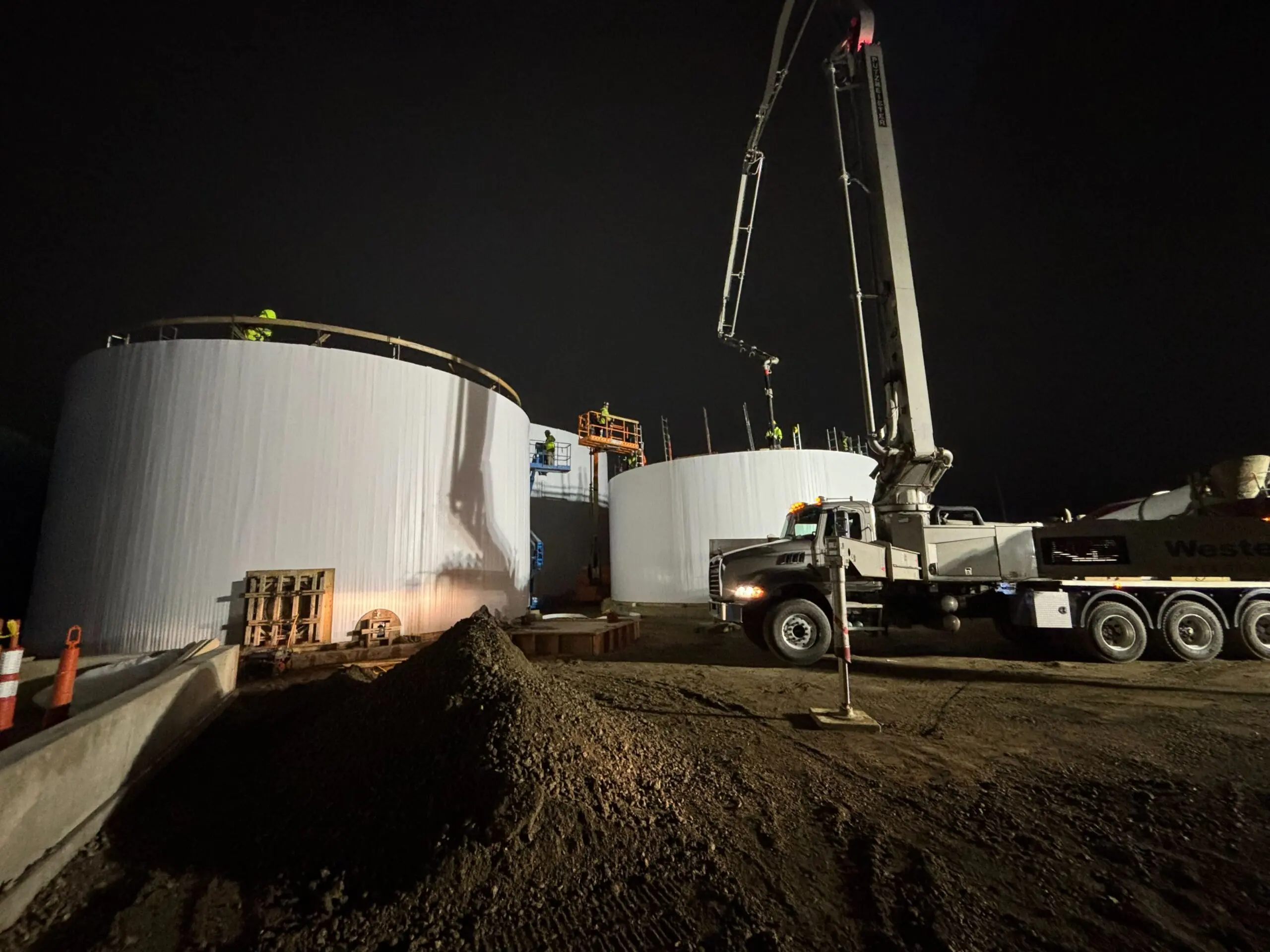
Superplasticizer supports vertical placement by providing flowability without increasing water content. Key controls include:
- Must be added at the jobsite
- Dosage and reaction time must be controlled
- Placement must occur within the required time window (critical 40 ± minutes control)
- If it flashes early, it can compromise workability and consolidation—especially in tall walls and staged lifts
Crystalline additives
Crystalline waterproofing additives improve long-term watertight performance, but they can influence set time and workability. This is why the full mix must be evaluated well before pour day.
Best practice: An Octaform Trainer should validate mix performance prior to placement so any needed adjustments can be made early—before the pour becomes time-critical.
6) Concrete Vibration: The Non-Negotiable Step
Proper consolidation is essential for bond quality, surface integrity, and watertight performance.
Recommended practices include:
- Use pencil vibrators with defined insertion patterns
- Staff two vibratory crews to maintain consistent consolidation pace
- Ensure the crew understands the vibration plan and follows it consistently
Inadequate vibration can cause cavitation (void formation), which can directly lead to a leaking containment structure.
For initial pours, an Octaform Training representative must be present to support correct execution and real-time adjustments.
7) Thermal Imaging and Post-Pour QC:
During placement, Octaform Trainers may use a thermal imaging camera to verify uniform concrete placement and identify potential issues such as voids or cold joints. Thermal imaging is:
- Non-destructive
- Useful for confirming uniform placement and vibration effectiveness
- A way to make real-time corrections during the pour—before problems become leaks
Post-pour QC should include a documented walkdown, photos, and daily notes that capture conditions and observations for traceability.
Build with Certainty, Not Hope:
Concrete placement in containment structures is not a “day-of” activity—it is a controlled process that starts with planning, alignment, and verification. When stakeholders follow the QC checklist, respect mix requirements, control logistics, and execute disciplined vibration and documentation, the result is a more predictable project and a leak-free structure.
